Blog

Top Switch Mode Power Supply Manufacturers in China?
Switch Mode Power Supply manufacturers sit at the center of a demanding electronics supply chain. Their products convert incoming power into stable output for servers, industrial controls, telecom equipment, medical devices, and everyday electronics. The International Energy Agency’s Electricity 2024 report estimates that data centres, artificial intelligence, and cryptocurrency used about 460 terawatt-hours of electricity worldwide in 2022. It projects this demand could exceed 1,000 terawatt-hours by 2026. That growth makes efficiency, thermal design, and dependable protection features practical purchasing concerns—not just items on a datasheet.
China offers a deep electronics manufacturing base, but factory scale alone does not prove product quality. The Ministry of Industry and Information Technology reported that China’s electronic information manufacturing sector generated 15.1 trillion yuan in operating revenue in 2023. This figure describes the wider sector, not the power-supply market specifically. That distinction matters. The following guide compares Chinese manufacturers through verifiable details, including product ranges, published specifications, certifications, production capabilities, and application experience. Buyers should also request test records and clarify warranty terms before choosing a supplier. A polished catalogue can look convincing; real performance depends on the unit, the load, and the operating environment. Some information may be difficult to compare consistently, so the assessment is useful—but not final.
Read more »
 By:Ethan Caldwell
- November 3, 2026
How to Choose the Right Power Supply in 2026?
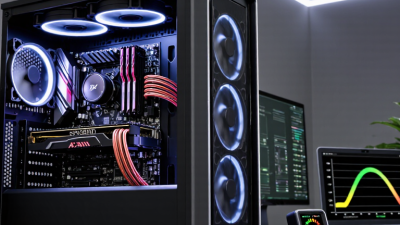
Choosing the right Power Supply in 2026 means looking beyond the wattage printed on its box. A high number cannot guarantee stable power, quiet operation, or efficient performance. Small label. Big consequences. The right unit must match your components, workload, case, and plans for upgrades.
Efficiency matters beyond the electricity bill. Lawrence Berkeley National Laboratory’s 2024 United States Data Center Energy Usage Report estimated that U.S. data centers used about 176 terawatt-hours in 2023, roughly 4.4% of national electricity consumption. The report projects demand could reach 325–580 terawatt-hours by 2028. Those figures describe data centers, not home PCs, so they do not tell you which unit to buy. They do show why power conversion deserves attention. Certification labels can help, but performance at your actual load matters more than a badge alone.
Power-electronics expert Dr. Alex Lidow, founder and CEO of Efficient Power Conversion, has focused much of his work on improving power-conversion efficiency. A practical paraphrase of that engineering principle is: judge efficiency where the system actually operates. Treat that as guidance, not a verbatim quotation or a complete buying rule. In this guide, we’ll compare wattage, connector support, efficiency, protections, acoustics, and independent testing. We’ll also flag a common uncertainty: manufacturers’ specifications do not always make real-world comparisons easy. A little skepticism helps. The goal is a Power Supply that delivers clean, dependable power without paying for capacity your system will never use.
Read more »
By:Ethan Caldwell
- November 3, 2026
How to Choose a Switching Power Supply?
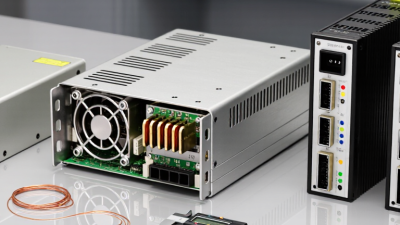
Choosing a Switching Power Supply is not just a matter of matching the voltage printed on a device. The supply must fit the real electrical load, operating environment, and expected service life. A useful selection begins with three figures: input voltage range, required output voltage, and maximum load current. Check the load’s startup demand too. Motors, lamps, and digital circuits can draw brief surges that exceed their steady-state current. A small margin can help, but choosing an oversized unit without reason may waste space and budget. That sounds simple. It isn’t always.
Next, compare efficiency, output ripple, isolation, and available protection features. A supply installed inside a warm enclosure may need more thermal headroom than one used in open air. Check the manufacturer’s datasheet for derating curves, operating temperature, and protection against overload, overvoltage, and short circuits. These details matter more than a prominent efficiency number alone. For example, a compact 24-volt unit may appear suitable on paper, yet its rated output can fall as ambient temperature rises. Read the fine print.
Also consider mounting, cooling, wiring access, and relevant safety approvals for the intended application. A carefully chosen Switching Power Supply supports stable operation and easier maintenance; a rushed choice can create noise, heat, or unexpected shutdowns. Some specifications still leave room for interpretation, so verify critical values with the manufacturer when the consequences of failure are serious. The best choice is not always the most powerful model. It is the one whose documented limits match the actual job, with enough room for realistic variation.
Read more »
By:Ethan Caldwell
- November 3, 2026