Xi'an, Shaanxi, China · OEM / ODM Transformer & Power Supply Manufacturer [email protected]  |  ✔ Intertek-Verified Supplier
0%

Switch Mode Power Supply manufacturers sit at the center of a demanding electronics supply chain. Their products convert incoming power into stable output for servers, industrial controls, telecom equipment, medical devices, and everyday electronics. The International Energy Agency’s Electricity 2024 report estimates that data centres, artificial intelligence, and cryptocurrency used about 460 terawatt-hours of electricity worldwide in 2022. It projects this demand could exceed 1,000 terawatt-hours by 2026. That growth makes efficiency, thermal design, and dependable protection features practical purchasing concerns—not just items on a datasheet.

China offers a deep electronics manufacturing base, but factory scale alone does not prove product quality. The Ministry of Industry and Information Technology reported that China’s electronic information manufacturing sector generated 15.1 trillion yuan in operating revenue in 2023. This figure describes the wider sector, not the power-supply market specifically. That distinction matters. The following guide compares Chinese manufacturers through verifiable details, including product ranges, published specifications, certifications, production capabilities, and application experience. Buyers should also request test records and clarify warranty terms before choosing a supplier. A polished catalogue can look convincing; real performance depends on the unit, the load, and the operating environment. Some information may be difficult to compare consistently, so the assessment is useful—but not final.
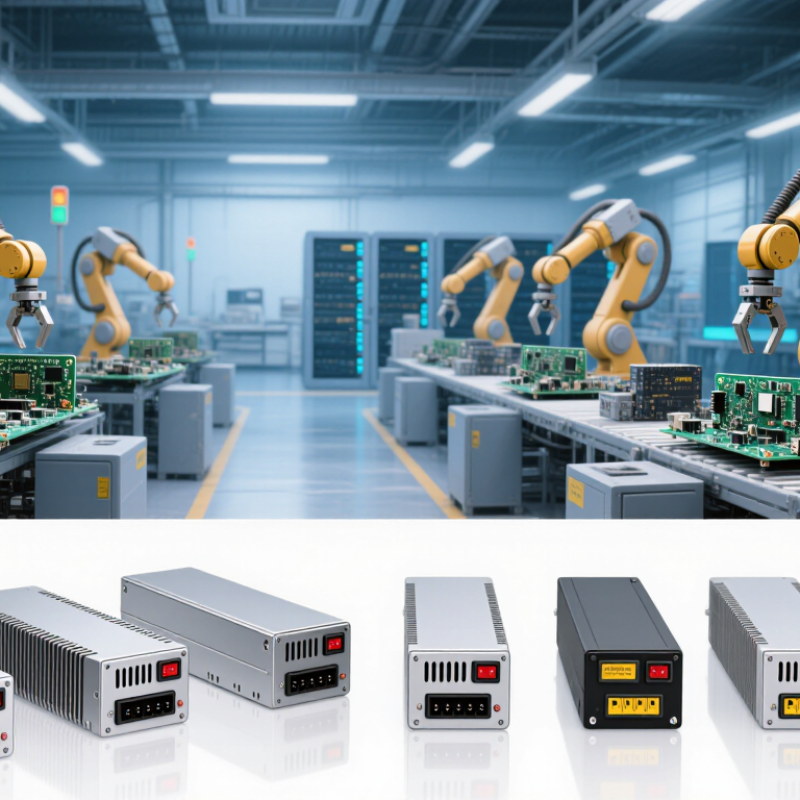
Top Switch Mode Power Supply Manufacturers in China?

SMPS Fundamentals: AC–DC Conversion, 85–264 Vac Inputs, and Key Topologies

Top Switch Mode Power Supply Manufacturers in China?
A switch mode power supply converts AC mains into regulated DC through fast electronic switching. Its input stage typically uses a bridge rectifier and bulk capacitor. Across an 85–264 Vac range, the rectified voltage can vary widely, so the design must handle both low-line current and high-line stress. Small details matter.
Power factor correction may shape the input current before energy reaches the switching stage. Common topologies include flyback designs for lower power levels, forward converters for moderate loads, and LLC resonant converters where efficiency and heat control are priorities. Each has trade-offs. A compact flyback unit may run warmer under sustained load, while an LLC design can require more careful tuning.
When evaluating a China-based manufacturer, ask for measured efficiency, temperature-rise data, and performance across the stated input range. Check whether testing includes startup at low line, sudden load changes, and operation inside a closed enclosure. Paper specifications help, but they do not reveal every weak point. One practical caveat: results from a clean laboratory may not match a dusty cabinet or a hot production floor. Read the test conditions closely.

China’s SMPS Makers: Mornsun, Huntkey, Great Wall, and Their Product Ranges

China’s switch-mode power supply makers cover a broad mix of applications, from compact AC-DC adapters to enclosed industrial units. Product ranges often include DIN-rail supplies for control cabinets, open-frame modules for equipment integration, and DC-DC converters for changing voltage between system stages. Higher-power models may serve factory machinery, while smaller units fit instruments and communication devices. The right choice depends on more than output wattage. Check voltage tolerance, peak load, mounting space, and cooling conditions. A unit that fits the spec sheet may still run hot inside a crowded enclosure.

Tips: Check the load first. Leave room for airflow, and compare efficiency at your typical operating load. Heat matters. Confirm whether terminals, protection features, and certifications suit the actual installation. Catalog descriptions can be neat; wiring in the field is less so.

When comparing suppliers, look for clear datasheets, dimensional drawings, and accessible technical support. Ask how a model behaves during startup, overload, and temperature changes. For projects with several voltage rails, compare compatible product families rather than selecting each supply in isolation. This can simplify integration, though it may narrow your options. Not always. Request samples when practical, then measure temperature and output stability under realistic conditions. Also review warranty terms and production consistency. A low price is useful, but not if the selected unit creates extra testing or replacement work later.

Comparing Manufacturers by Output Power, Efficiency, and Application Sector

Top Switch Mode Power Supply Manufacturers in China?
Comparing Manufacturers by Output Power, Efficiency, and Application Sector

When comparing Chinese switch mode power supply manufacturers, start with the output power your equipment actually needs. A compact control unit may require only tens of watts, while factory machinery can need several kilowatts. Check continuous output, peak capacity, and derating at high temperatures. A rating alone tells little. Ask for test conditions and thermal performance data, especially if the unit will run inside a warm, enclosed cabinet.

Efficiency should be compared at the loads your application uses, not just at peak performance. Telecom systems, LED lighting, and industrial controls have different operating patterns and priorities. Look for clear efficiency curves, protection features, and relevant quality documentation. One figure can mislead. A spreadsheet may look precise, yet overlook cooling needs, wiring losses, or service access. That is worth reconsidering before choosing a supplier.

Tips: Request sample units and test them under your own load and temperature conditions. Compare delivery consistency and technical support, too. A slightly lower-rated unit may suit your design better, but only if its limits are clearly documented.

Typical SMPS Output Power and Efficiency by Application Sector

Representative product-class values, not manufacturer-specific rankings.

Higher-power telecom and server supplies commonly use advanced conversion designs to achieve high efficiency. Values shown are rounded examples for typical product classes; specifications vary by model, load, and operating conditions.

Efficiency Benchmarks: 80 PLUS Tiers and 90%+ Conversion Designs

For buyers comparing switch mode power supply manufacturers in China, efficiency figures need context. An 80 PLUS tier indicates performance at specified input voltages and load points; it is not a guarantee of efficiency in every installation. A useful bench check records input and output power at 20%, 50%, and 100% load, then compares the readings with the stated rating. Keep the input voltage consistent. Small changes can affect results.

A 90%+ conversion design can reduce wasted energy and heat, especially in equipment that runs for long shifts. But “90%+” should name its test conditions. Is it measured near half load, at full load, or across a wider range? Ask manufacturers for test reports, temperature conditions, and sample-to-sample variation. Then check ripple, protection behavior, and thermal performance; efficiency alone says little about these. Watch the heatsink temperature. A quiet supply may still run hot. That detail is easy to miss.

For a factory evaluation, test several units rather than relying on one polished sample. Compare readings after warm-up, with a stable load and calibrated instruments. The process takes time. Reports can also be incomplete, and I would treat that as a reason to ask sharper questions, not as proof of poor quality.

Safety and Compliance: IEC 62368-1, EMC Testing, and Global Market Access

Top Switch Mode Power Supply Manufacturers in China?

For buyers comparing switch mode power supply manufacturers in China, safety evidence matters as much as output voltage or price. IEC 62368-1 evaluates hazards such as electric shock, fire, and excessive heat. Ask suppliers for current test reports that match the exact model, enclosure, and input range you plan to purchase. A certificate for a similar unit may not cover a design change. Check insulation details, protective earth connections, and temperature readings under full load. Small details matter.

EMC testing also affects whether a power supply can operate reliably beside sensitive equipment. Request conducted and radiated emissions results, plus immunity test details relevant to the intended use. Reports should identify test conditions and equipment, not just state “passed.” Global market access requires additional checks because product documentation and approval routes vary by destination. Confirm applicable requirements with qualified local experts before shipment. A neat document folder is useful, but it cannot replace careful review. I have seen teams trust a label too quickly; that is easy to do, and worth reconsidering.

Tips: Compare reports against the production model and keep revision records. Ask who performs testing and how failed results are corrected. Check again after component changes. Short step, often missed.

Top Switch Mode Power Supply Manufacturers in China? - Safety and Compliance: IEC 62368-1, EMC Testing, and Global Market Access

Assessment Area Relevant Standard or Regulation What to Check for a Switch Mode Power Supply Useful Supporting Evidence Market Access Considerations
Electrical safety IEC 62368-1 Confirm that the product’s intended use and classification are covered, and that safeguards address electric shock, fire, temperature, and other relevant energy hazards. Check the exact model and rated input range. Test report and certificate, product rating information, critical-component list, and construction details. Verify that the report covers the supplied configuration. National adoptions and accepted editions can differ. Confirm the applicable edition and local certification route for each destination market.
Conducted and radiated emissions CISPR 32 for applicable multimedia equipment; other product-family standards may apply Review emissions results for the power supply in its intended operating mode, including representative loads, cables, and configurations. Confirm whether testing covers the PSU alone or the end product. EMC test report identifying the model, test setup, operating conditions, limits, and results. The applicable emissions standard depends on the product and market. A component power supply’s assessment may not establish compliance for the final equipment.
Power-quality emissions IEC 61000-3-2 and IEC 61000-3-3, where applicable Check harmonic-current and voltage-fluctuation or flicker assessments against the applicable equipment class, input conditions, and exclusions. Test results with the equipment classification, operating conditions, and any claimed exclusions clearly stated. Applicability depends on the equipment’s intended use, input characteristics, and the rules adopted in the destination market.
EMC immunity IEC 61000-4 series, as referenced by the applicable product or generic standard Review relevant immunity tests, such as electrostatic discharge, radiated RF, electrical fast transients, surge, and conducted RF. Check performance criteria and any observed interruptions or recovery behavior. Immunity test report listing test levels, performance criteria, operating modes, and results. Test selection and severity are determined by the applicable product standard, installation environment, and market requirements.
European Union electrical safety and EMC Low Voltage Directive 2014/35/EU and EMC Directive 2014/30/EU, when applicable Confirm that the finished product falls within the relevant scope and that the manufacturer has assessed all applicable EU requirements. EU Declaration of Conformity, technical documentation, risk assessment where relevant, and supporting test reports. The Low Voltage Directive generally covers equipment rated 50–1,000 V AC or 75–1,500 V DC. Other EU rules, including RoHS, may also apply.
United States EMC FCC Part 15, Subpart B, for applicable unintentional radiators Determine whether the power supply or finished equipment is subject to the applicable FCC authorization and measurement requirements. Assess the final configuration where required. Applicable test records and compliance information for the marketed device, including identification of the tested configuration. Requirements depend on the device classification and how it is marketed or incorporated into other equipment.
China compulsory certification China Compulsory Certification (CCC), where the product is within the applicable catalogue and rules Check the product category, intended use, ratings, and whether the exact product is covered by current CCC implementation requirements. Valid certification or other required conformity documentation for the applicable product and model, where required. CCC applies to products covered by the relevant catalogue and implementation rules; it should not be assumed to apply to every power supply.
Model and factory traceability Certification-scheme requirements and applicable market surveillance rules Match the nameplate, model number, critical components, manufacturing site, and production revisions to the compliance documentation. Model list, controlled bill of materials, change-control records, production quality records, and current certificates or reports. Changes to components, construction, factory location, or ratings may require review or additional testing under the relevant scheme.

Note: Requirements depend on the product’s intended use, configuration, ratings, and destination market. This table is a screening guide, not a certification determination; verify current rules and applicable standards with the relevant conformity-assessment body.

FAQS

What types of switch-mode power supplies are available?

Common options include AC-DC adapters, enclosed units, DIN-rail supplies, open-frame modules, and DC-DC converters. They serve different installation needs.

How should I choose the right power supply?

Check output voltage, load, peak demand, mounting space, and cooling. Leave room for airflow. Wattage alone is not enough.

Why does operating temperature matter?

A unit can run hot inside a crowded cabinet, even when its specifications look suitable. Measure temperature under realistic load.

What information should I request from a supplier?

Ask for current datasheets, dimensional drawings, test reports, and technical support details. Clear documents help, but they do not answer everything.

What safety evidence should I check?

Review current IEC 62368-1 reports for the exact model, enclosure, and input range. Check insulation, protective earth, and full-load temperatures.

What should EMC test reports include?

Look for conducted and radiated emissions results, plus relevant immunity tests. Reports should show test conditions and equipment, not just “passed.”

Is it useful to test a sample before ordering?

Yes, when practical. Measure output stability and temperature with your real load. A neat datasheet may not reflect your installation.

What should I consider when using several voltage rails?

Compare compatible product families to simplify integration. This can limit choices, though. I still tend to trust tidy labels too quickly.

What should I check after a component change?

Review the updated model and test records. Repeat relevant checks, and confirm destination requirements with qualified local experts. Short step, often missed.

Conclusion

A Switch Mode Power Supply (SMPS) converts AC electricity into regulated DC power through high-frequency switching, with many designs supporting input ranges from 85 to 264 Vac. Common topologies are selected according to requirements such as output power, size, cost, and electrical isolation. China’s manufacturing sector offers a broad range of supplies for consumer electronics, industrial equipment, communications, and other applications, with models spanning compact low-power units to higher-capacity systems.

When comparing products, consider rated output, conversion efficiency, operating conditions, and suitability for the intended application. Efficiency labels such as 80 PLUS provide useful benchmarks, while well-designed converters may achieve efficiency above 90% under specified test conditions. Safety and electromagnetic compatibility are equally important: relevant IEC 62368-1 assessments and EMC testing help demonstrate that a product meets established requirements and is prepared for sale in its target markets.

Ethan Caldwell

Ethan Caldwell

Ethan Caldwell is a professional marketing specialist who helps customers understand how well-designed products can meet their everyday needs. With a strong knowledge of the company’s offerings, he brings clarity and practical insight to the topics he covers, from product features and applications......