Precision Engineering Solutions
Industrial Galvanic Transformers & Regulated Power Conversion Modules
Factory-direct electromagnetic components, DIN-rail instrumentation drivers, and isolated switching supplies engineered to suppress severe common-mode surges across Bosnian manufacturing plants and telemetry installations.
Localized Application Landscape
Galvanic Isolation Dynamics in Bosnia and Herzegovina’s Industrial Corridors
Navigating regional grid variations, heavy-industry harmonic reflections, and mountainous telemetry vulnerabilities from Zenica to Banja Luka and Sarajevo.
Mitigating Ground Loops in High-Demand Metallurgy & Machining Hubs
The industrial landscape across the Federation of Bosnia and Herzegovina and Republika Srpska—anchored in historic hubs such as Zenica, Tuzla, and Mostar—relies extensively on heavy metallurgical refining, commercial wood processing, and precision automotive tier-supplying. Operating large electric arc furnaces, high-tonnage stamping presses, and three-phase motor banks generates massive conductive high-frequency transients and common-mode voltage fluctuations.
When sensitive programmable logic controllers (PLCs), distributed control systems (DCS), and optical sensors share a common galvanic grounding plane with these high-inductance loads, ground potential shifts inevitably trigger erratic digital signal trips, corrupted bus communications, and fatal semiconductor breakdown. Incorporating custom single-phase isolation transformers between the 230V plant feeder and the sensitive cabinet rack introduces complete magnetic galvanic decoupling, ensuring zero DC continuity between the polluted incoming grid and delicate supervisory systems.
Key Engineering Metric: Zelqo single-phase isolation units utilize electrostatic Faraday shielding wound between primary and secondary copper layers, attenuating common-mode capacitive coupling noise by >65 dB up to 30 MHz.
Grid Stabilization for Hydroelectric & Remote Mountain Telemetry
Bosnia and Herzegovina generates substantial surplus electricity via alpine hydroelectric run-of-river plants and thermal generation stations along the Drina, Neretva, and Vrbas river basins. However, downstream single-phase distribution lines traversing rugged karst topography frequently suffer from extreme line-voltage sags, prolonged switching surges, and direct atmospheric lightning discharges coupled across overhead aerial spans.
Crucial infrastructure—ranging from telecom repeater towers atop Mount Trebević and Bjelašnica to micro-hydro valve actuators and water purification switchgear—requires single-phase isolation transformers capable of operating under heavy harmonic distortion without saturating the magnetic core. By utilizing high-permeability cold-rolled grain-oriented (CRGO) silicon steel laminations, Zelqo toroidal and EI transformers restrict magnetic flux leakage, minimize eddy-current losses, and maintain ultra-low excitation currents even under severe 253V continuous line swell conditions.
Automotive Component Machining
Precision CNC lathes and robotic weld controllers in the Sarajevo-Goražde automotive supply chain require 1:1 or 230V/115V isolation to eliminate high-frequency spikes induced by adjacent plasma cutting and VFD motor drives.
Elevator & Hoist Automation
Rapid urban infrastructure modernization across Sarajevo and Banja Luka relies on auto-transformers and low-noise toroidal isolation transformers to step down cabin control, safety brake logic, and acoustic passenger displays.
Solar Inverter Balance of Plant
Utility and rooftop photovoltaic expansion across Herzegovina (e.g., Stolac, Bileća) leverages isolated transformers on the AC monitoring auxiliary string to block DC bias injection back into local 50 Hz municipal grids.
Strategic Sourcing & Energy Trends
Modernizing Power Architecture: The Bosnian Market Outlook
Aligning with European Energy Community directives, transitioning from legacy oil-immersed systems, and optimizing direct factory supply chains.
CE & BAS EN Standards
Industrial panels installed within BiH increasingly demand full alignment with BAS EN 61558-2-4 (general isolation) and EN 60601-1 (medical-grade isolation), pushing panel builders away from uncertified open bobbins toward vacuum-varnished or epoxy-encapsulated assemblies.
Energy Efficiency & EcoDesign
Rising commercial electricity tariffs in the Western Balkans make no-load core losses a prime buying criterion. Toroidal core configurations and low-loss grain-oriented silicon steel reduce 24/7 idle consumption by up to 40% compared to legacy EI laminations.
Transition to Dry-Type Magnetics
Stringent environmental and fire safety regulations in enclosed manufacturing sites and subterranean mining operations have triggered an accelerated phase-out of flammable dielectric fluids in favor of Class F (155°C) and Class H (180°C) dry resin insulation systems.
OEM Direct Sourcing Resilience
Bosnian switchgear builders and engineering contractors face unpredictable markups and extended delivery times from regional intermediaries. Sourcing directly from verified Chinese custom factories provides custom terminal pinouts, tailored tapping ratios, and guaranteed bill of materials consistency.
Technical Comparison: Toroidal vs. EI Laminated Single Phase Isolation Transformers
Use this empirical matrix to select the optimal transformer topology for your panel enclosure volume, budget boundaries, and acoustic noise tolerances.
| Engineering Attribute | Toroidal Core Isolation Transformer | EI Laminated (Silicon Steel) Transformer | Application Guidance for BiH Engineers |
|---|---|---|---|
| Stray Magnetic Flux | Ultra-Low (< 10% of EI Core) | Moderate to High (Radiates fringe fields) | Specify Toroidal for audio amplifiers, medical instrumentation, and compact telemetry racks. |
| Acoustic Hum & Vibration | Virtually Silent (< 30 dBA) | Audible 50 Hz hum (40 - 55 dBA) | Toroidal prevents resonance in architectural elevator cabs and commercial control consoles. |
| Inrush Current Multiplier | High (15x to 25x rated current) | Moderate (8x to 12x rated current) | Toroids require Type D circuit breakers or soft-start NTC thermistors on plant feeders. |
| Volume & Weight Footprint | 30% - 50% lighter, lower height profile | Bulkier, heavier footprint | Toroidal saves expensive panel enclosure depth; EI is ideal for heavy floor-standing control boxes. |
| Dielectric Withstand Test | Up to 4,000 VAC Primary-to-Secondary | Up to 4,000 VAC Primary-to-Secondary | Both meet BAS EN 61558-2-4 reinforced galvanic isolation requirements when wound by Zelqo. |
| Unit Cost & Tooling Flexibility | Slight premium for specialized circular winding | Most economical for standard stock bobbins | EI offers the lowest initial capital cost for high-volume standard auxiliary distribution boards. |
Enterprise Manufacturing Capabilities
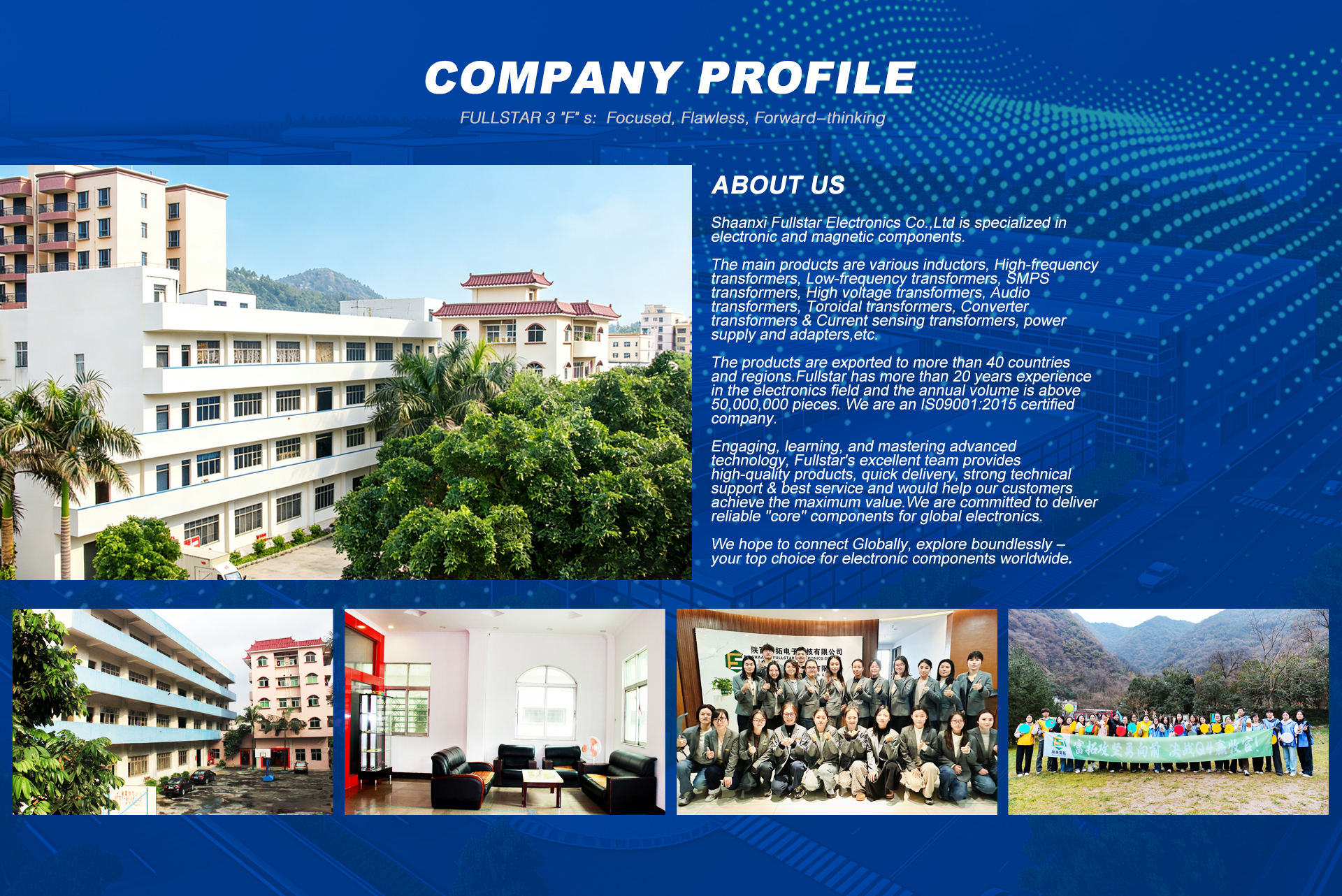
Why Global Sourcing Teams Partner with Shaanxi Zelqo Power
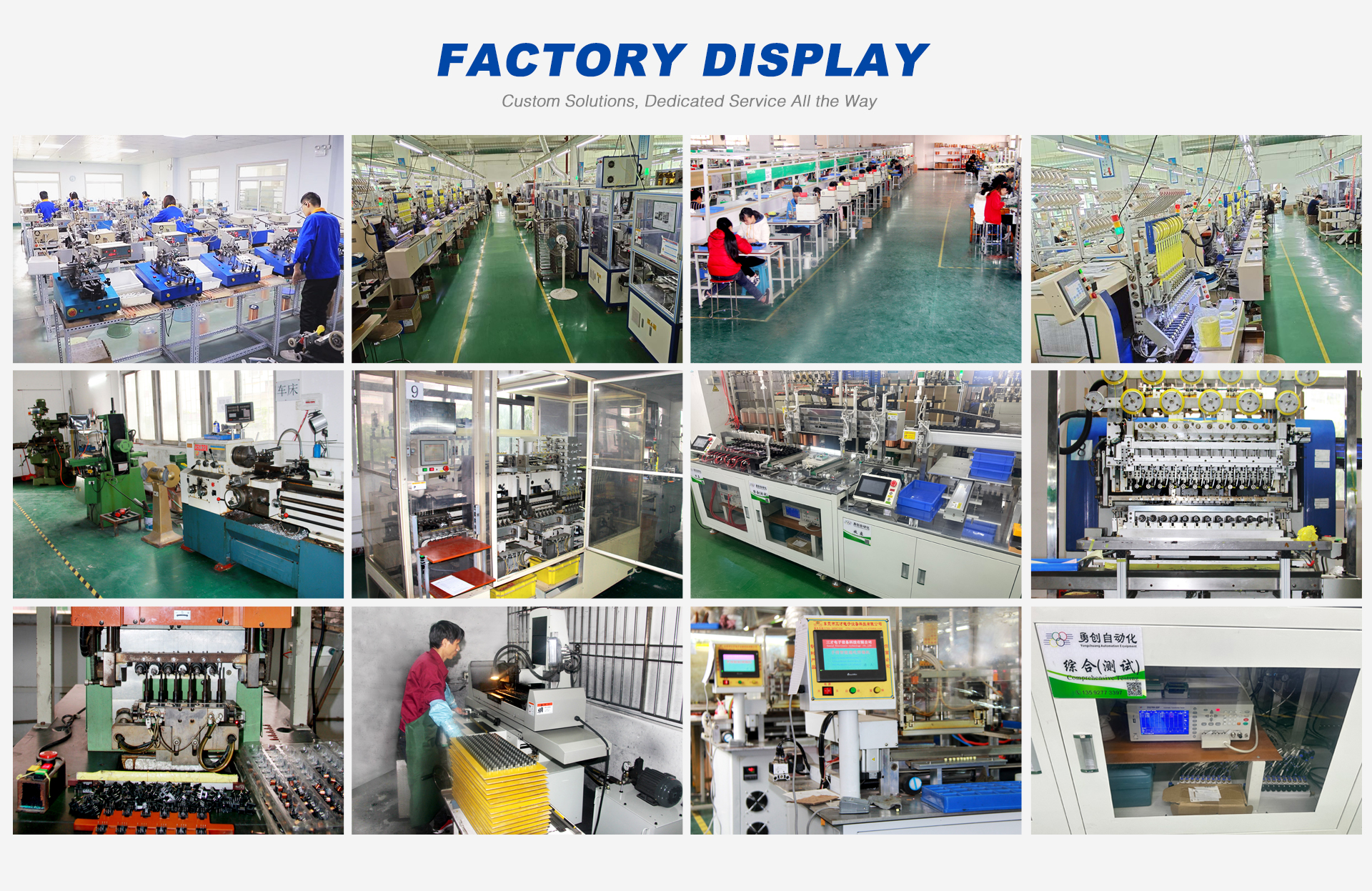
Intertek on-site verified production facilities in Xi’an, China, dedicated to custom electromagnetic components, rigorous multi-stage testing, and bespoke industrial engineering.
Full In-House ODM/OEM
Rather than relabeling off-the-shelf catalog units, our electrical engineers calculate core geometries, winding layers, wire gauges, and multi-tap configurations matched directly to your mechanical enclosures.
Intertek On-Site Verified
Our office, production floor, and quality verification workflows at Poly Zhongda Plaza, Xi'an have undergone thorough third-party operational audits, ensuring authentic export trade capacity.
Dedicated Multi-Stage QC
Every production run passes LCR bridge inductance verification, DC winding resistance balancing, high-voltage impulse testing, full-load thermal burn-in, and primary-secondary dielectric hi-pot safety testing.
Custom Mechanical Potting
From center-bolt toroidal mounting cups and vacuum pressure impregnation (VPI) varnishing to UL94-V0 fire-rated epoxy potting, our transformers resist vibration, humidity, and atmospheric dust.
Verified Custom Sourcing & Manufacturing Workflow
From your initial electrical specification to verified containerized export delivery, every milestone is monitored by an assigned bilingual technical account manager.
01
Spec Review
Verification of primary/secondary voltages, operating frequency (50/60 Hz), total kVA/VA capacity, isolation voltage, and mounting space constraints.
02
Prototype Build
Precision CNC machine winding of primary and secondary turns, triple-insulated barrier tape application, and thermal fuse embedding.
03
Electrometric QC
Verification of winding resistance, core excitation currents, no-load losses, and primary-to-secondary hi-pot dielectric tests (>3.75 kV).
04
Impregnation & Aging
Vacuum varnish encapsulation or epoxy potting, followed by 100% full-load thermal burn-in to eliminate early component failures.
05
Export Packing
Custom labeling, barcoding, heavy-duty carton packing with reinforced corner cushioning, and palletization for sea, rail, or air transit.
Procurement Intelligence
Frequently Asked Questions for Bosnian Engineering Buyers
Practical answers covering customs tariffs, BAS standards compliance, voltage compatibility, and OEM minimum order thresholds.
How do Zelqo single-phase isolation transformers align with electrical standards in Bosnia and Herzegovina?
In Bosnia and Herzegovina, electrical products are regulated by the Institute for Standardization of Bosnia and Herzegovina (BAS) alongside harmonized European directives. Zelqo isolation transformers are built to meet and exceed BAS EN 61558-1 and BAS EN 61558-2-4 standards. Our designs provide double or reinforced insulation, undergo 3,750V to 4,000V AC dielectric withstand testing, and satisfy all Low Voltage Directive (LVD 2014/35/EU) and Electromagnetic Compatibility (EMC 2014/30/EU) performance criteria.
What nominal grid voltage ratings should be specified for installations across the Federation and Republika Srpska?
The standard single-phase low-voltage distribution across Bosnia and Herzegovina is nominal 230V AC ±10% at 50 Hz (single-phase) and 400V AC (line-to-line three-phase). Because legacy networks or rural zones near industrial centers experience swings between 205V and 250V, we regularly customize primary windings with primary compensation taps (e.g., 0 - 220V - 230V - 240V) to allow field technicians to achieve precise secondary output voltages under actual site load conditions.
How does our sourcing team handle customs clearance, import documentation, and shipping to BiH?
Shipments entering Bosnia and Herzegovina are processed through the Indirect Taxation Authority (Uprava za indirektno oporezivanje - UIO). Zelqo Power provides comprehensive B2B export documentation including verified Commercial Invoices, Packing Lists with HS codes (commonly HS 8504.31 or 8504.32), Bills of Lading, and Certificates of Origin (CO). We regularly handle EXW, FOB, CIF (via Port of Ploče in Croatia or Port of Bar in Montenegro), and door-to-door DAP freight directly to your warehouse in Sarajevo, Banja Luka, Tuzla, or Zenica.
What specific electrical parameters are required to initiate an ODM custom quotation?
To provide an exact engineering proposal and competitive quote within 24 hours, our design office requires: (1) Primary input voltage and tapping structure, (2) Secondary output voltage(s) and full-load current/power rating (VA/kVA), (3) Operating frequency (standard 50 Hz for BiH), (4) Core topology preference (toroidal ring for low profile/silent operation vs. EI lamination for standard chassis mounting), (5) Insulation class (Class B 130°C, Class F 155°C, or Class H 180°C), (6) Electrostatic shielding requirements, and (7) Maximum physical enclosure dimensions and terminal block styles.
Can Zelqo supply medical-grade isolation transformers compliant with BAS EN 60601-1 for hospital facilities in Banja Luka and Sarajevo?
Yes. Medical isolation transformers have much stricter safety boundaries than standard industrial models. We build custom medical-grade toroidal isolation units featuring ultra-low earth leakage currents (<100 µA), built-in PT100/PTC thermal monitoring sensors, dual-layer electrostatic shielding, and reinforced insulation capable of withstanding >4,000 VAC dielectric hi-pot testing, safeguarding sensitive patient-connected diagnostics and operating theatre IT power systems.
What are your Minimum Order Quantities (MOQ) and production turnaround times for custom batches?
We support agile European procurement schedules. For customized prototypes and validation samples, our minimum order quantity starts as low as 1 to 5 units, with sample build times generally running 7 to 10 working days. Commercial batch production runs typically range from 50 to 5,000+ units, with standard mass-production lead times delivered in 3 to 4 weeks depending on the availability of custom-stamped laminations or specialized copper wire gauges.