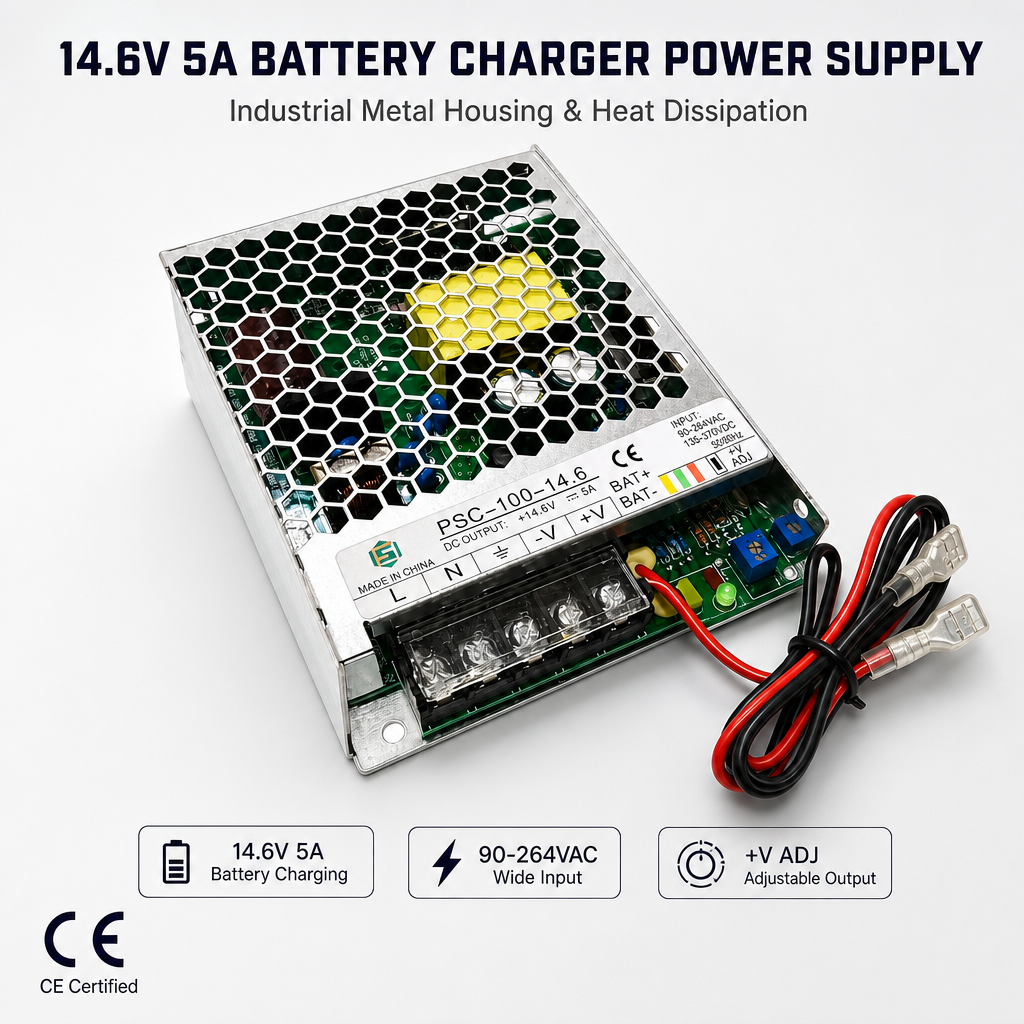
100W 14.6V 5A UPS Charge Function Switching Mode Power Supply
Integrated battery backup failover switch, multi-stage constant current charging mode, optimized for lithium and lead-acid architectures.
Peak Operational Efficiency
Hi-Pot & Aging Inspected
Ultra-Low Output Ripple
Verified Factory Facility
Tested under severe full-load aging and impulse conditions to safeguard automation arrays, industrial machinery, telecommunication backbones, and LED drivers.
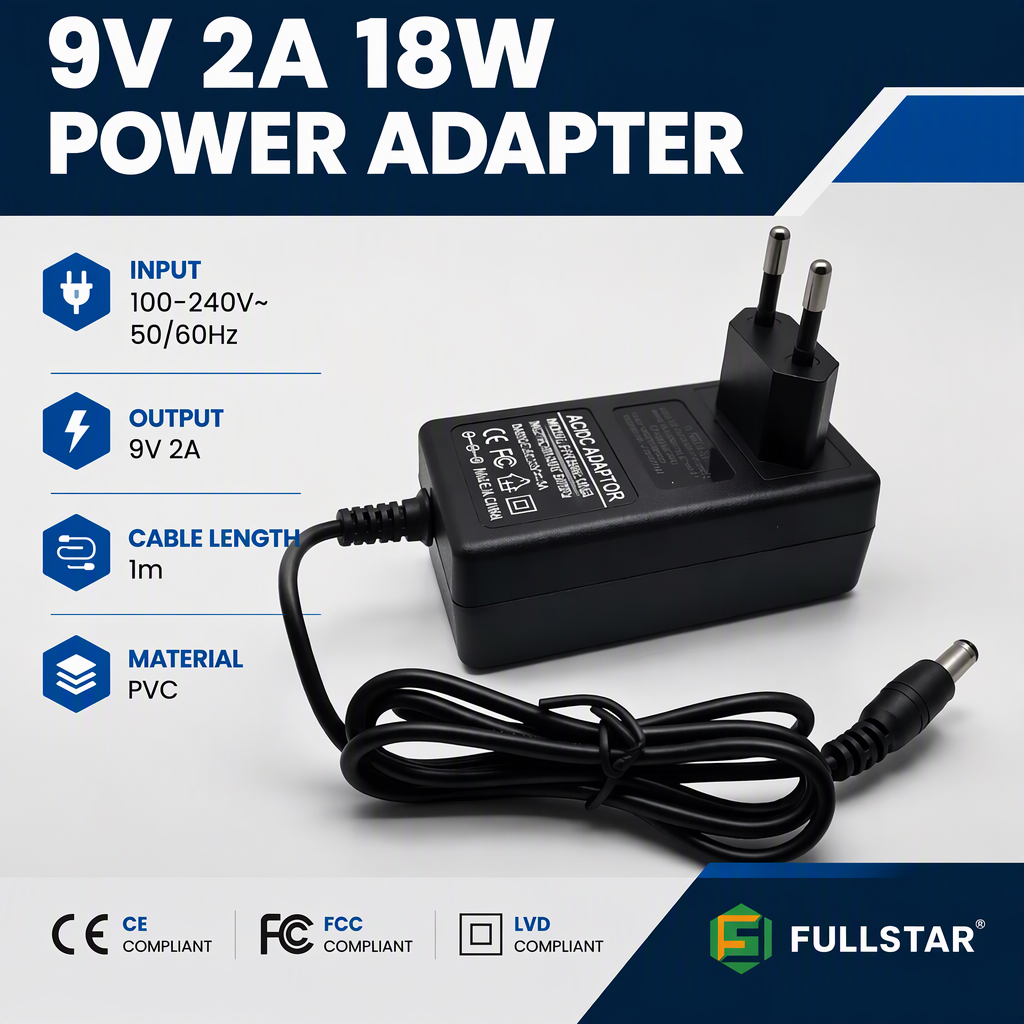
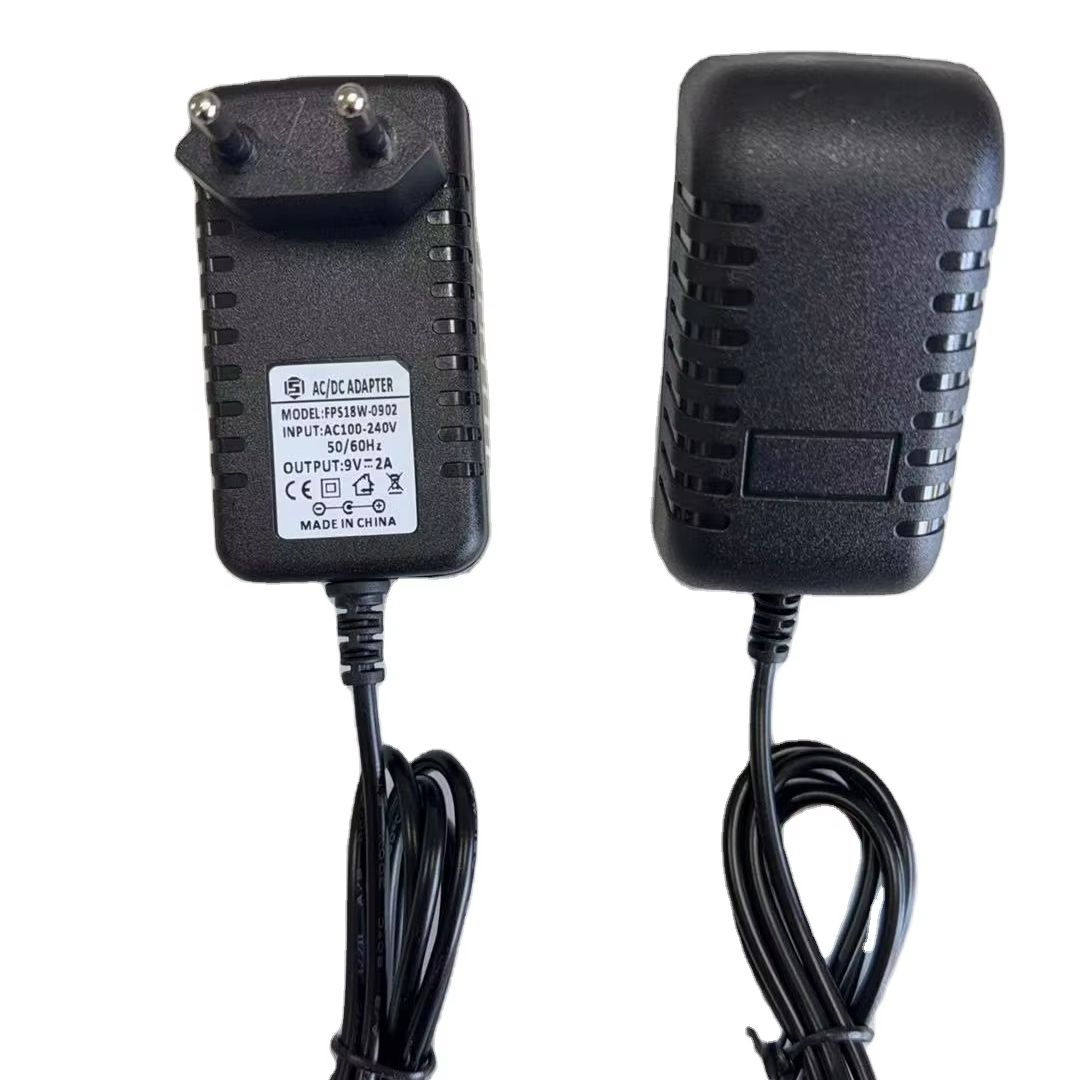
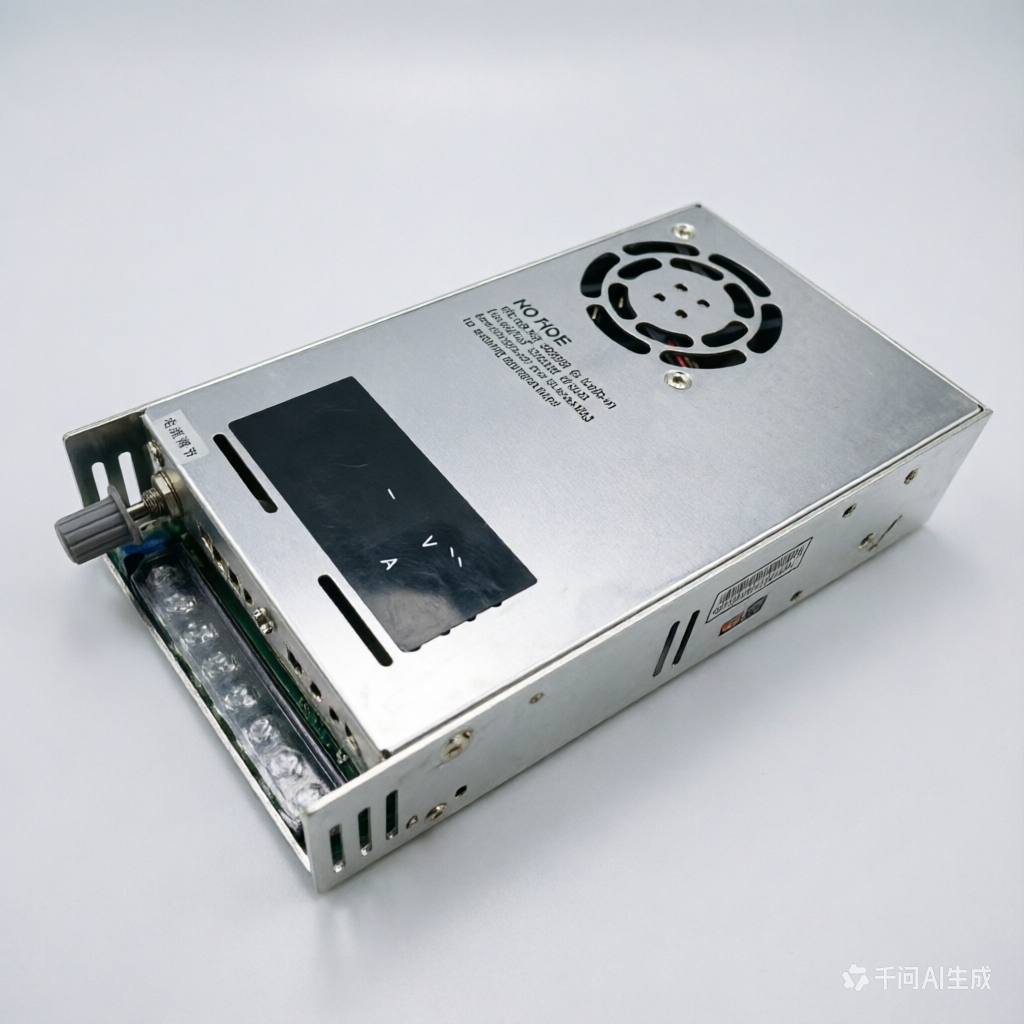
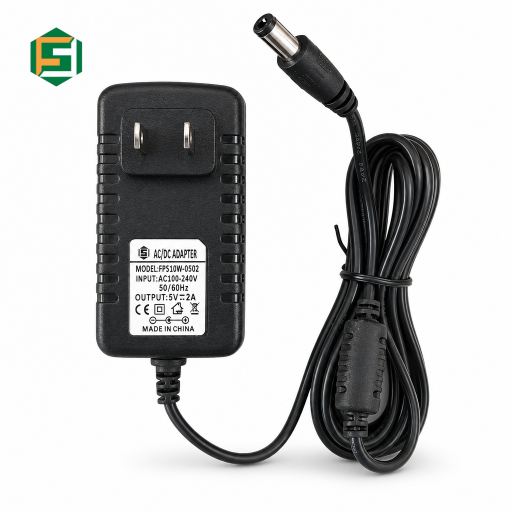
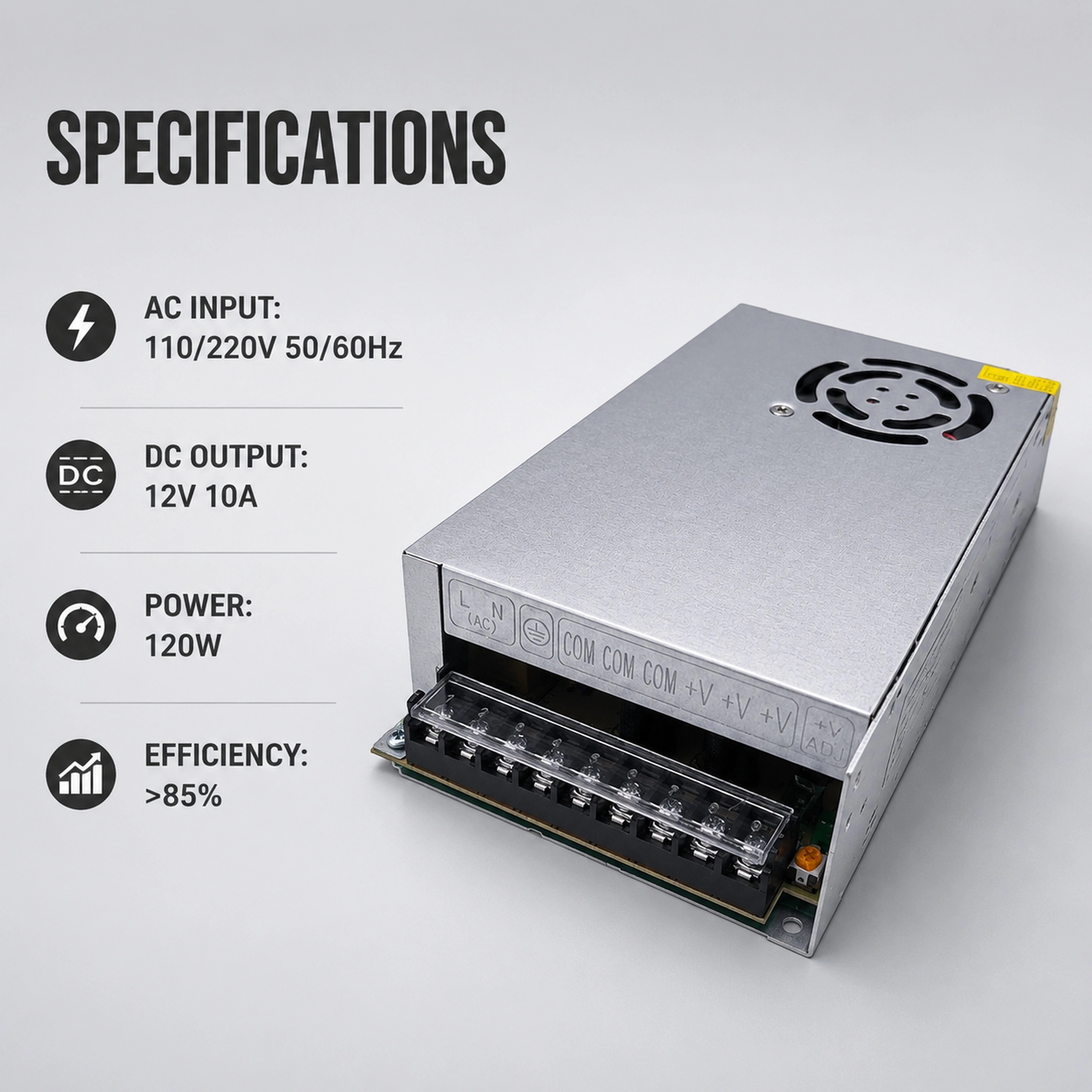
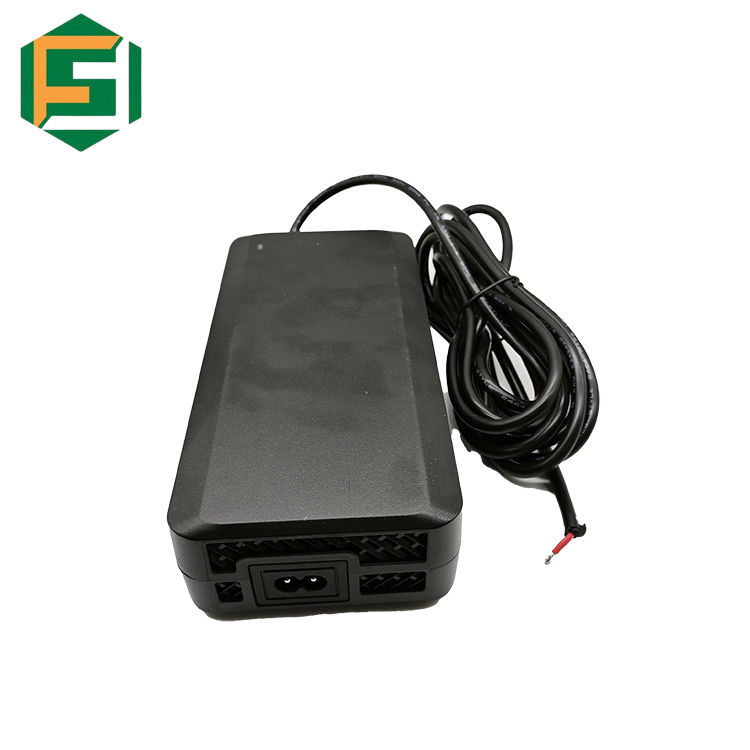
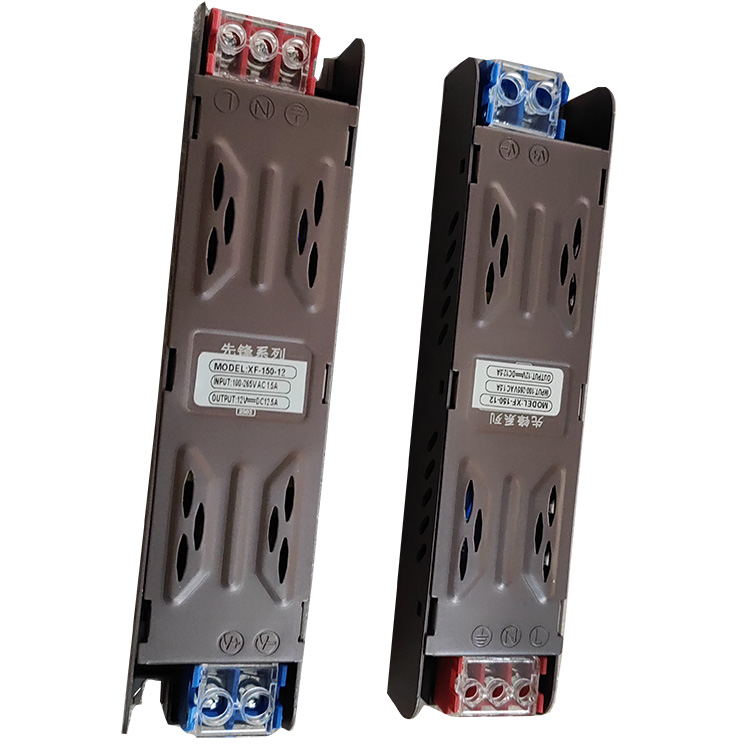
In modern electronic design and industrial manufacturing, the demand for power conversion efficiency has moved far beyond rudimentary voltage step-down logic. Today, custom OEM metal case power supply architectures act as the critical frontline defense against electrical spikes, severe common-mode harmonic distortion, and unforgiving thermal profiles. Conventional open-frame power units or unshielded plastic adapters are increasingly being phased out in mission-critical deployments due to their susceptibility to electromagnetic interference (EMI) and insufficient thermal conductivities.
By leveraging cold-rolled steel, anodized aluminum alloy extrusions, and perforated galvanic enclosures, custom metal case SMPS units achieve dual-vector shielding: suppressing both electric field radiation ($E$-field) and magnetic induction loops ($H$-field). Internally, engineering teams must overcome the severe thermodynamic constraints imposed by high-frequency switching operations (typically 65 kHz to 200 kHz). Through finite-element magnetic modeling (FEM) and custom planar transformer winding, core dissipation losses are reduced by up to 28% compared to standard catalogue units, granting overseas buyers unprecedented operational longevity under continuous $24/7/365$ duty cycles.
Global original equipment manufacturers are pivoting toward decentralized manufacturing, higher compliance thresholds, and wide-bandgap semiconductors.
B2B procurement teams are rapidly demanding Gallium Nitride (GaN) and Silicon Carbide (SiC) primary switches within custom OEM metal enclosures. These wide-bandgap devices decrease gate charge resistance, drastically elevate switching frequencies, shrink magnetic core volumes, and lift power densities beyond 25W per cubic inch.
Instead of maintaining disjointed inventories for various operational voltages, procurement strategies favor centralized, multi-tap custom platforms capable of delivering synchronized 12V, 24V, and 48V rails with dynamic load balancing to power simultaneous logic, motor driving, and auxiliary circuitry.
With the integration of IEC/EN 62368-1 superseding legacy 60950 and 60065 standards, tier-1 global distributors require verified engineering reports for electrical clearance, creepage distances, and high-frequency common-mode noise suppression built directly into factory production audits.
Examining the engineering milestones advancing heat exchange geometry, digital control loops, and circular sustainability.
Analog PWM controllers are ceding ground to DSP-driven architectures running bidirectional PMBus or CAN protocols. These digital feedback loops allow real-time diagnostic reporting on ambient enclosure temperatures, internal ESR degradation, and predictive component maintenance.
Metal enclosure tooling has shifted from uniform punching to custom honeycomb stamping calculated via thermal CFD simulation. This guarantees directional air currents across hot-spot switching MOSFETs and secondary Schottky diodes, preventing thermal runaway even without loud forced-air fans.
In accordance with global net-zero targets and strict ErP Lot guidelines, modern metal case units integrate smart burst-mode switching controllers that curtail no-load standby dissipation to below 0.15W, minimizing parasitic drain in decentralized standby installations.
Rooted in Xi'an, Shaanxi, our ISO-aligned production floor blends advanced magnetic component design with rigorous multi-tier physical inspection protocols.
Our complete operational footprint, technical personnel credentials, testing equipment calibration matrices, and export transaction histories are independently audited and validated by Intertek.
Unlike assembly-only aggregators, we wind, vacuum-impregnate, and calibrate our own high-frequency ferrite transformers and toroidal chokes, ensuring precise match with your circuit load parameters.
Every single manufactured unit is subjected to rigorous LCR digital bridge testing, DC low-resistance checks, impulse winding analysis, 100% full-load burn-in aging, and primary-to-secondary high-voltage dielectric isolation tests.
Our dedicated R&D engineering hub converts complex electrical schematics and enclosure design constraints into functional, laboratory-verified engineering prototypes within days.
Addressing crucial electrical parameters, thermal performance ratings, and custom tooling considerations.